
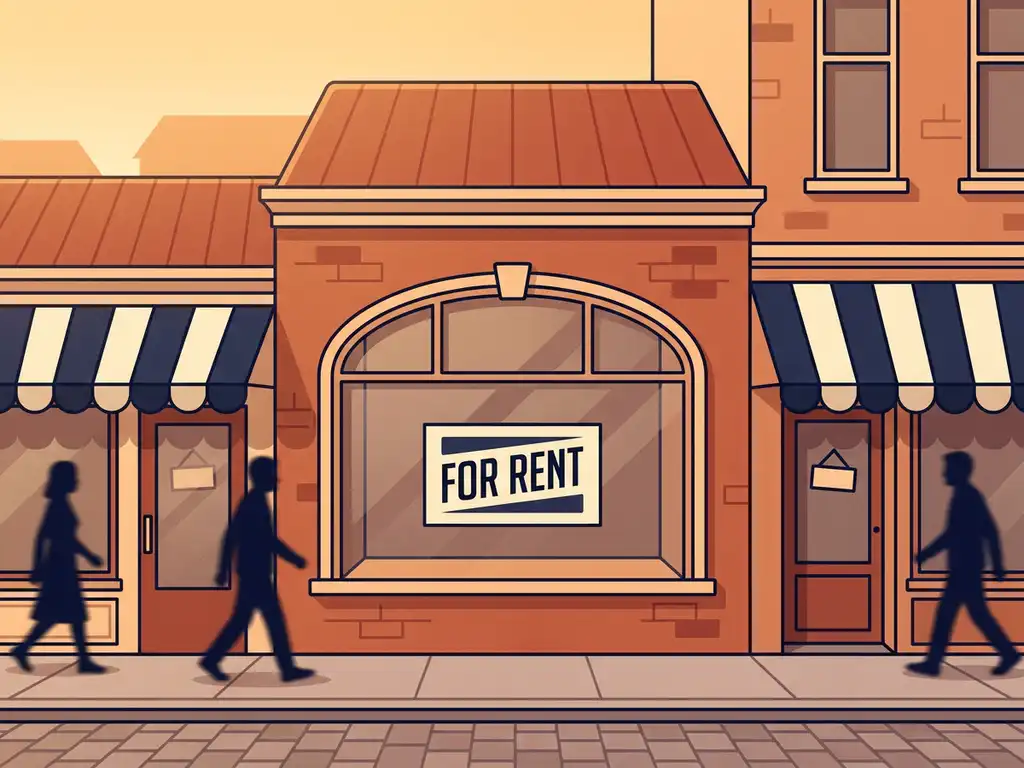
When renting a small retail space in a city center, the most important factors to consider are the relationship between rent, location quality, and lease terms. An attractive city center is no guarantee of success if the rent is disproportionate to your expected revenue, or if the lease offers little flexibility. The questions below will guide you step by step toward making the right decision.
What is a good size for a small retail space in a city center?
A small retail space in a city center typically ranges between 30 and 150 m². What works best for your concept depends on your product category, the presentation you want to offer, and the rent you can afford. More floor space means higher fixed costs, so efficiency per square meter is the key consideration.
Boutiques, concept stores, and specialist retailers often perform well with 40 to 80 m². That is sufficient for a clear product presentation without the space feeling empty. Food concepts, kiosks, or pop-up formats can even manage with less than 30 m², provided the location has sufficient foot traffic.
When weighing your options, also consider the layout. A 60 m² space with a logical customer flow and good natural light will outperform a 90 m² space with an awkward floor plan or an upper level that customers rarely venture to spontaneously. Always request a floor plan and walk through the space at different times of day.
What is a market-rate rent per m² in a city center?
The rent per m² for retail space in a city center varies considerably depending on the city, street, and type of location. In the busiest shopping streets of Amsterdam or Utrecht, rents at prime locations are significantly higher than in a mid-sized city such as Zwolle or Breda. Without street-level market knowledge, it can be difficult to assess whether a listing is priced in line with the market.
As a general rule: the higher the foot traffic, the higher the rent per m². In prime locations in major cities, rents for small retail spaces can run into hundreds of euros per m² per year. In smaller city centers or secondary locations, prices are typically considerably lower. However, a lower rent in a less busy location is not automatically more advantageous if revenue also falls short.
A reliable way to assess whether a rent is market-rate is to compare it with recently signed leases on the same street or in the same city center area. KroesePaternotte holds lease data going back to 1984, covering virtually the entire Dutch retail market. This makes it possible to assess, street by street and city by city, whether an asking rent is realistic — before you sign.
What should you look out for in a retail lease agreement?
A retail lease agreement contains provisions covering rent, lease term, indexation, notice periods, and permitted use. The most critical points are the length of the lease, the possibility of early termination (break options), and the rules governing rent reviews.
In the Netherlands, the ROZ model is typically used for retail space. Standard lease terms are five years, sometimes with an option to extend for a further five years. As a new retailer, you will want flexibility, but landlords prefer security. It is therefore worth negotiating a break option after two or three years, so you are not locked in if the concept does not work at that particular location.
Also pay close attention to the following points in a retail lease agreement:
- Indexation clause: the rent is increased annually based on the consumer price index (CPI). Check whether a maximum increase has been agreed upon.
- Permitted use: the permitted trade or use of the space is explicitly stated in the lease. Any deviation requires the landlord’s consent.
- Condition of the premises: in what condition will you receive the space, and in what condition must you return it? Make sure this is documented in writing.
- Subletting prohibition: subletting the space without the landlord’s consent is generally not permitted.
- Bank guarantee or security deposit: landlords typically require three to six months’ rent as security.
Always have the lease reviewed by a specialist. A retail agent or lawyer who knows the market will spot unusual clauses that a layperson can easily overlook.
How do you find available retail spaces that are not listed on public portals?
A large proportion of available retail spaces in prime city center locations are never publicly advertised. Owners and developers prefer to lease directly through their own networks, to parties they know or that are introduced through an agent. Those who rely solely on public portals will miss out on the best locations.
The most effective way to access off-market listings is to work with a specialist retail agent with an extensive network. KroesePaternotte is in daily contact with owners, shopping center managers, and developers throughout the Netherlands, from Amsterdam to Groningen. As a result, properties that never appear on public listing sites do become available to entrepreneurs searching through this network.
It also pays to be proactive in the area where you want to open a store. Talk to local business owners, keep an eye out for vacant properties, and approach landlords directly. This takes time, but can occasionally lead to unexpected opportunities. Combine this approach with professional guidance for the best results.
When is a city center retail location truly right for your concept?
A city center retail location is right for your concept when the foot traffic matches your target audience, the rent fits within your financial model, and the space projects the right image for your brand. A busy location is not automatically the best location if the visitors there do not have the right purchasing intent.
Always assess a location at multiple times: on a weekday during the day, on a Saturday morning, and on a rainy afternoon. Foot traffic varies considerably by day and time of day. Also pay attention to who is passing by. A location that is perfect for a fashion store may be unsuitable for a specialist kitchenware shop if the visitors are not oriented toward that category.
Also look at the neighboring tenants. Strong anchor tenants in the immediate vicinity — such as a supermarket, a major fashion chain, or a concentration of restaurants and cafés — increase the appeal of a location. A retail space on a street without anchor tenants requires a stronger independent marketing effort to draw customers in.
What are the additional costs of renting a retail space?
In addition to the base rent, as a retail tenant you will typically pay service charges, VAT on the rent, and costs for fitting out and adapting the space. These additional costs can significantly increase the total monthly outlay compared to the advertised price.
Service charges and VAT
Service charges cover shared facilities such as cleaning of common areas, security, corridor lighting, and management costs. In a shopping center, these costs are higher than for a standalone retail unit. Always request an itemized service charge budget and compare it with the actual settlement from previous years. VAT (21%) is payable when the landlord opts for VAT-taxed rental, which is standard practice for commercial property.
Fit-out and adaptation costs
Many retail spaces are handed over as a shell or in a basic state. This means you will need to invest in flooring, lighting, fixtures and fittings, point-of-sale systems, and any renovations required. Depending on the concept and the condition of the space, these costs can range from a few thousand to tens of thousands of euros. Draw up a realistic budget in advance and ask the landlord whether a rent-free period (incentive) is available to offset these investments.
Finally, there are one-off costs associated with entering into a lease: the bank guarantee or security deposit, notary fees for registration, and any agent fees. At KroesePaternotte, we work on behalf of the tenant, not the landlord — meaning our guidance is focused on protecting your interests across all cost items in the leasing process.
Renting a small retail space in a city center requires a well-considered approach. From choosing the right floor area to understanding the lease agreement and finding locations that are never publicly advertised: every element has an impact on the success of your store. Find out how KroesePaternotte supports retailers in finding the right retail location across the Netherlands, or get in touch directly for a no-obligation conversation about your search.