
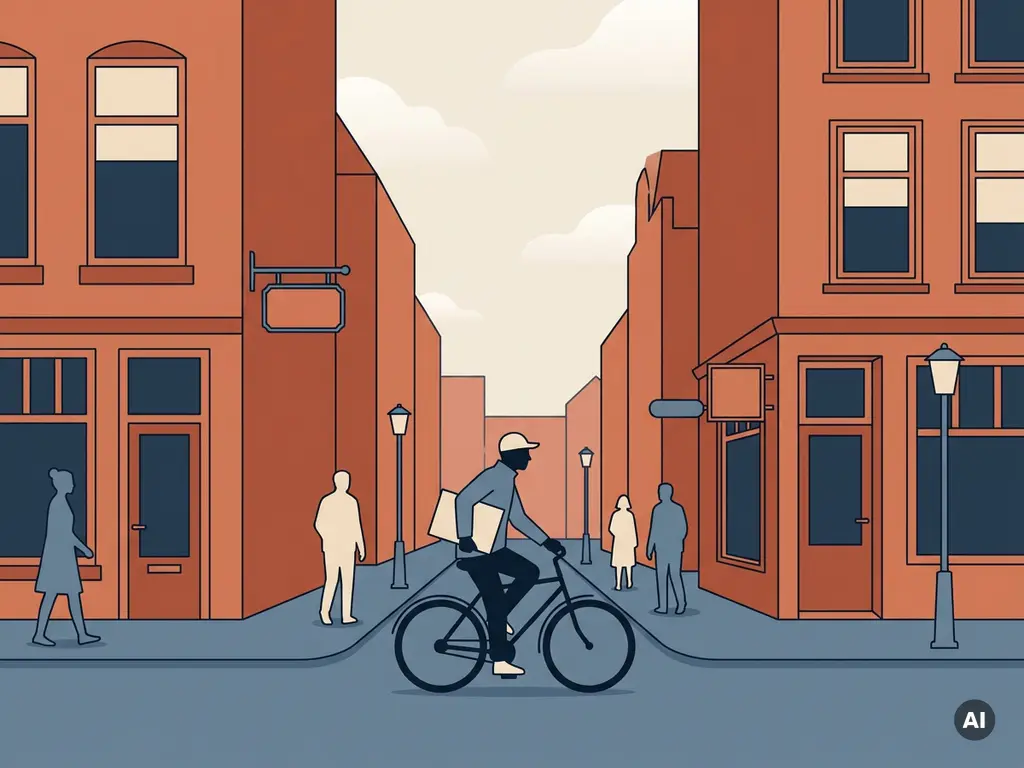
Online shopping has structurally changed footfall in Dutch city centres, but has not simply cut it in half. The decline varies considerably by location, city, and type of retail area. City centres with a strong hospitality and experience offering retain visitors; streets that relied purely on product purchases feel the pressure most acutely. The questions below map out what that shift means precisely for retailers, property owners, and anyone considering a retail location.
How much has footfall in city centres declined due to e-commerce?
Footfall in Dutch city centres has declined on average over the past ten years, but the extent varies considerably by location. Prime (A1) shopping streets in major cities such as Amsterdam, Utrecht, and Rotterdam show a more limited decline than secondary and tertiary locations. The growth of e-commerce is the primary structural driver behind that decrease, but economic conditions and urban policy also play a role.
What the data over longer periods show is that the decline does not follow a linear pattern. During economically strong years, footfall stabilises or recovers slightly, while periods of economic uncertainty accelerate the downturn. E-commerce has raised the threshold for a shopping visit: consumers are less inclined to head to a shopping street for a targeted purchase when they can do it from home. The visits that remain are more often purposeful or recreational in nature.
For retailers, this means that raw visitor numbers say less than they used to. The quality of foot traffic, measured in purchase intent and dwell time, has become more relevant than absolute volume.
Which retail locations suffer most from declining footfall?
Secondary and tertiary locations in medium-sized and smaller cities suffer most severely from the impact of e-commerce on footfall. Shopping streets that primarily functioned as a destination for purchasing everyday or comparable products lose visitors fastest. Peripheral retail areas without strong anchor tenants or hospitality anchor points are particularly vulnerable.
Within city centres, a clear distinction applies. Side streets and approach streets see a greater decline than the main shopping street. Shopping centres that are heavily dependent on fashion chain formats without a distinctive offering find that vacancy increases more quickly once an anchor tenant departs.
Geographically, the gap between large and small cities has widened. A shopping street in Groningen or Eindhoven with a strong local character can perform relatively well, while a comparable street in a smaller municipality without drawing power structurally struggles to attract visitors. Location selection has therefore become more critical than ever for entrepreneurs opening a new store.
Why do consumers still visit physical stores despite online alternatives?
Consumers visit physical stores because they want to feel, try on, or immediately take home products, but also because shopping fulfils a social and recreational function that cannot be replicated online. Experience, advice, and the certainty of an immediate purchase are drivers that e-commerce structurally cannot offer.
Research into consumer behaviour shows that orientation increasingly begins online, but that the final purchase for many product categories still takes place in-store. This is particularly true for clothing, shoes, furniture, and personal care products where fit, colour, or scent are decisive factors.
In addition, the social dimension plays a significant role. Shopping with friends or family, having a coffee after a purchase, or exploring a city while shopping: these are needs that do not disappear because a webshop exists. City centres that respond cleverly to this with a mix of retail, hospitality, and events maintain their appeal more effectively.
How does a physical store influence a brand’s online sales?
A physical store demonstrably increases a brand’s online sales. When a brand opens a store in a city, online search volume and online conversion from that region rise structurally. This effect is known in the retail sector as the “halo effect” of physical presence on digital performance.
The explanation is intuitive: a store makes a brand tangible and trusted. Consumers who have seen or tried a product in a physical environment more frequently purchase it online afterwards. The store acts as a three-dimensional billboard that builds trust in a way that digital advertisements cannot match.
This is precisely why many e-commerce brands are making the move to a physical location. The store is not just a sales channel, but a marketing instrument that strengthens overall brand performance. For entrepreneurs considering that step, the choice of location determines how strongly that halo effect plays out. Through renting retail space on the right street or in the right city, that effect can be maximised.
Which retail formats still attract large numbers of visitors to city centres?
Retail formats that offer experience, exclusivity, or a strong service dimension still structurally attract large numbers of visitors to city centres. Hospitality, beauty and personal care, sports retail with a community aspect, and concept stores with a strongly distinctive offering perform above average in terms of visitor numbers and dwell time.
Formats that compete purely on product availability without added experience lose ground to online alternatives fastest. The winning formats combine a physical product with a reason to visit that goes beyond the purchase itself: a workshop, a personal consultation, a unique in-store experience, or an exclusive range that is not available online.
Supermarkets and everyday grocery shopping remain a stable visitor-attracting factor, particularly when they serve as an anchor in a shopping centre or city street. Standalone supermarkets in well-accessible locations have therefore also remained relatively stable as a real estate investment amid broader pressure on visitor numbers in shopping streets.
What does the shift in footfall mean for rental prices in shopping streets?
The shift in footfall has structurally put rental prices at secondary and tertiary locations under pressure, while prime rental prices at strong A1 locations have remained more resilient. The difference in rental price between the best and weaker locations within the same city has grown larger in recent years, not smaller.
Owners of retail spaces at less strong locations are more frequently willing to offer rent discounts, incentives, and shorter lease terms to attract tenants. At prime locations in cities such as Amsterdam, Utrecht, The Hague, and Rotterdam, demand from quality retailers has remained relatively stable, keeping rental prices at their level.
For a retail entrepreneur looking for a retail space, this cuts both ways. An attractively low rental price at a secondary location can be a pitfall if the footfall is insufficient to operate profitably. At the same time, a prime location is not automatically too expensive: if the revenue per visitor is high enough, the location justifies the higher rental burden. KroesePaternotte holds lease contract data going back to 1984 and covering virtually the entire Dutch retail market, enabling market-conform rental prices to be assessed accurately per street and per city.
Those who wish to make a well-considered location choice based on current market data can consult the available retail spaces or get in touch directly for a conversation about the right location and a realistic picture of what a market-conform rental price is in the intended area.
Related Articles
- How do you identify overhuurde retail properties in the Netherlands?
- How to rent a pop-up retail space in a busy city centre?
- What does it cost to hire a retail broker?
- How large is the vacancy rate in Dutch shopping streets?
- What is the RICS standard and why does it matter for retail valuations?
- How does a rent review affect your retail investment return?
- How do market trends affect retail property investment decisions?
- What are the legal pitfalls of a retail space lease agreement?