
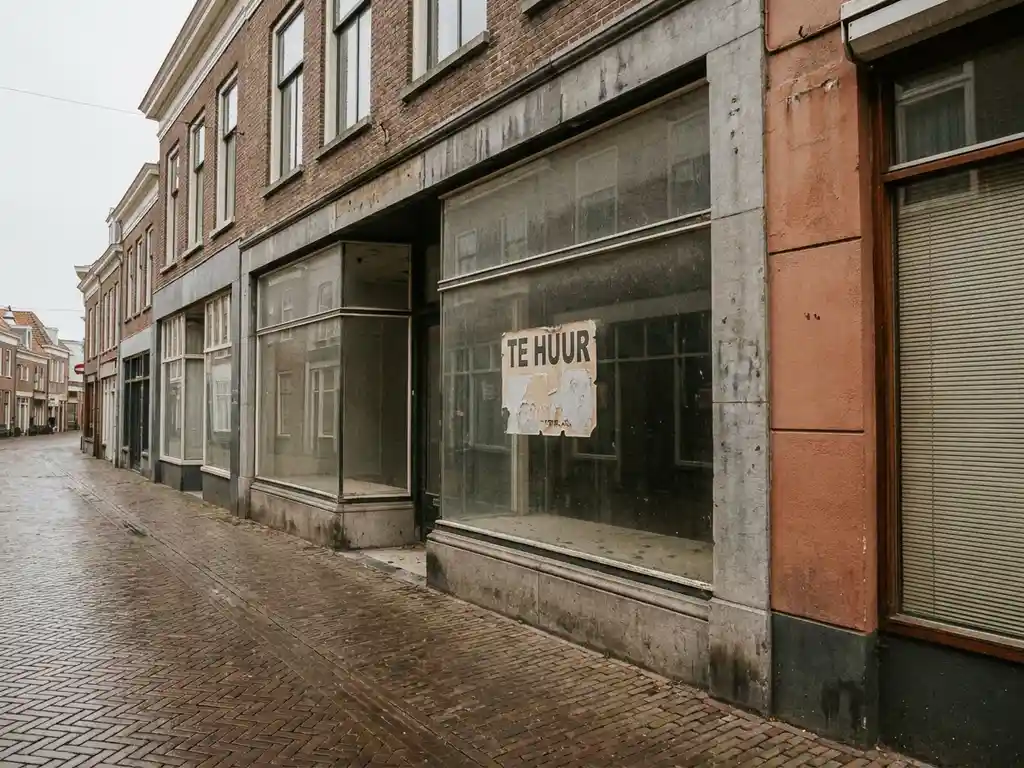
Overhuurde retail property in the Netherlands carries real investment risk. When a lease is priced above the current market rent, the asset is vulnerable to a rent correction at the next huurprijsherziening, which can materially reduce income and compress the property’s value. For international investors unfamiliar with Dutch lease law, this risk is easy to underestimate and expensive to discover after signing.
The Dutch retail real estate market rewards granular local knowledge. Understanding whether a passing rent is sustainable requires not just macro data, but contract-level intelligence on comparable transactions in that specific location. The questions below unpack the mechanics, the risks, and the due diligence steps that matter most.
How does overhuur affect a retail property’s investment value?
Overhuur occurs when the passing rent on a retail lease exceeds the current market rent for that unit. This directly inflates the apparent income of the property, which in turn inflates its capital value when priced on a yield basis. If the market rent is corrected downward at lease renewal, the income falls and the asset reprices accordingly, often sharply.
The effect on investment value is compounded by how Dutch retail property is typically valued. Valuers assess market rent as a core input, and a significant gap between passing rent and market rent signals structural overvaluation. An asset trading at a 5% net initial yield looks very different if the sustainable rent is 20% below the contracted figure. The yield on true market rent could be 6% or higher, meaning the buyer has overpaid relative to the asset’s realistic income trajectory.
In a market where retail investment advisory depends on accurate rent substantiation, overhuur is one of the most common traps for buyers who rely on headline income rather than verified market rent comparables.
What triggers a huurprijsherziening under Dutch lease law?
A huurprijsherziening is a statutory rent review under Dutch law, governed by Article 7:303 of the Dutch Civil Code. It can be initiated by either the landlord or the tenant after a lease period of at least five years, or after five years have elapsed since the last rent review. The review sets rent at the market level, based on comparable transactions in the relevant area over the preceding five-year period.
The 303 procedure is not a negotiation in the conventional sense. If the parties cannot agree, either side can apply to the court, which will appoint an expert to determine market rent based on documented comparables. This means the outcome is anchored to actual transaction data, not asking rents or theoretical valuations.
For overhuurde properties, this mechanism is significant. A tenant paying above market rent has a strong incentive to initiate a huurprijsherziening as soon as they are legally entitled to do so. Investors who acquire a property without understanding when the next review window opens are buying a time-limited income stream, not a stable one. Understanding the huurprijsherziening process is essential before any acquisition decision.
What are the main risks of buying an overhuurde retail asset?
The primary risks of acquiring an overhuurde retail property in the Netherlands fall into three categories: income risk, vacancy risk, and valuation risk. Each can materialise independently, but they frequently reinforce each other.
Income risk
The most direct risk is a rent reduction at the next huurprijsherziening. If the passing rent is materially above market, the tenant has a legal route to reduce it. The investor who acquired the property at a yield based on the inflated rent will immediately see their income fall, with no corresponding reduction in the purchase price paid.
Vacancy and re-letting risk
A tenant paying above-market rent is also a tenant with an incentive to exit at lease expiry. If they choose not to renew, the landlord must re-let at current market rent, which may be significantly lower. In weaker locations across the Dutch retail real estate market, re-letting at any rent can be a challenge. The combination of overhuur and a structurally weakening location is particularly dangerous, because the inflated income masks the true demand for the space.
Valuation and exit risk
When the investor eventually seeks to sell, a sophisticated buyer or their valuer will identify the overhuur and price the asset on sustainable market rent rather than passing rent. The seller faces a discount at exit that was not reflected in the acquisition price. This valuation gap can eliminate yield and, in some cases, produce a capital loss even in a stable market environment.
How can investors identify overhuur before acquiring a Dutch retail property?
Identifying overhuur before acquisition requires access to verified comparable rental transactions for the specific location and retail format. The passing rent must be benchmarked against actual signed leases for comparable units in the same street or centre, not asking rents or index-adjusted figures from prior years.
The key steps in identifying overhuur are:
- Obtain the full lease including the contracted rent, lease start date, indexation history, and any rent-free periods or incentives that were part of the original deal
- Establish the current market rent using recent comparable transactions in the same location tier and retail format
- Calculate the gap between passing rent and market rent, and assess whether it is within a range that a tenant would realistically accept at renewal
- Determine when the next 303 review window opens and whether the tenant has already indicated intent to review
- Assess tenant financial health: a financially strong tenant is more likely to exercise their legal rights, while a weaker tenant may have limited leverage to push back
Access to transaction-level data is the critical constraint here. KroesePaternotte maintains a lease database covering the Dutch retail market going back to 1984, which provides the depth of comparable evidence needed to make this assessment reliably. This is the kind of granular intelligence that generic brokerage reports cannot replicate.
Does overhuur always mean a retail asset is overpriced?
No. Overhuur does not automatically mean an asset is overpriced, but it does mean the acquisition price must reflect the income risk rather than the current passing rent. Whether the asset is fairly priced depends on how large the rent gap is, how soon a review can be triggered, and what the re-letting prospects are if the tenant exits.
In some cases, overhuur is modest and the tenant is stable and long-established in the location. A small premium above market rent, with several years remaining before a review window opens, may represent acceptable risk if the yield on market rent is still attractive. The question is whether the investor is being compensated for the risk through a lower acquisition price.
In practice, overhuurde assets are sometimes marketed at prices that assume the passing rent is sustainable. This is where the risk lies. An investor who acquires at a price reflecting current income, without adjusting for the probability of a rent correction, is taking on asymmetric downside. The correct approach is to price the asset on market rent and treat the overhuur as a temporary income buffer, not a permanent feature.
What due diligence should international investors run on Dutch retail leases?
International investors acquiring retail property in the Netherlands should treat lease due diligence as the core of the investment assessment, not a secondary check. Dutch retail lease law has specific features that differ materially from other European markets, and unfamiliarity with these mechanics is a common source of mispriced acquisitions.
A thorough lease due diligence process for Dutch retail property should cover:
- Lease term and renewal structure: Dutch retail leases typically follow a 5+5 year structure. Understand exactly where the current lease sits within that structure and when the tenant has the right to exit or renegotiate.
- Rent review eligibility: Establish whether a 303 review has already been requested, whether one is imminent, and what the likely outcome would be based on current market comparables.
- Indexation history: Many Dutch retail leases include annual CPI-linked indexation. In periods of high inflation, this can push passing rents significantly above market levels even where the original rent was set correctly.
- Tenant covenant strength: Assess the financial position of the tenant. A strong covenant with a long track record in the location is a different risk profile from a single-brand operator with limited reserves.
- Service charge and maintenance obligations: Understand what costs fall to the landlord and whether these are clearly defined in the lease.
- Market rent substantiation: Commission an independent valuation from a specialist with access to recent comparable transactions. This is not a step to delegate to a generalist firm.
KroesePaternotte operates the largest retail valuation practice in the Netherlands, and all major Dutch banks rely on this expertise for their retail property assessments. For international investors navigating Dutch lease complexity, working with a specialist who combines valuation expertise with active leasing market knowledge is the most reliable way to avoid acquiring at the wrong price.
For investors building or reviewing a Dutch retail portfolio, the retail market research and investment advisory services at KroesePaternotte provide the location-level intelligence and transaction experience that international capital needs to make defensible decisions in this market. Learn more about the team and how they work with cross-border investors.
Related Articles
- How do Dutch retail rents compare across major cities?
- How do you value a retail property in the Netherlands?
- What drives rental growth in Dutch retail real estate?
- How do you finance the opening of a new retail location?
- What is a market rent review in Dutch retail property?
- What is a net initial yield in Dutch retail property?
- Why is tenant mix important in Dutch shopping centres?
- Can you improve retail property returns by repositioning a Dutch asset?