
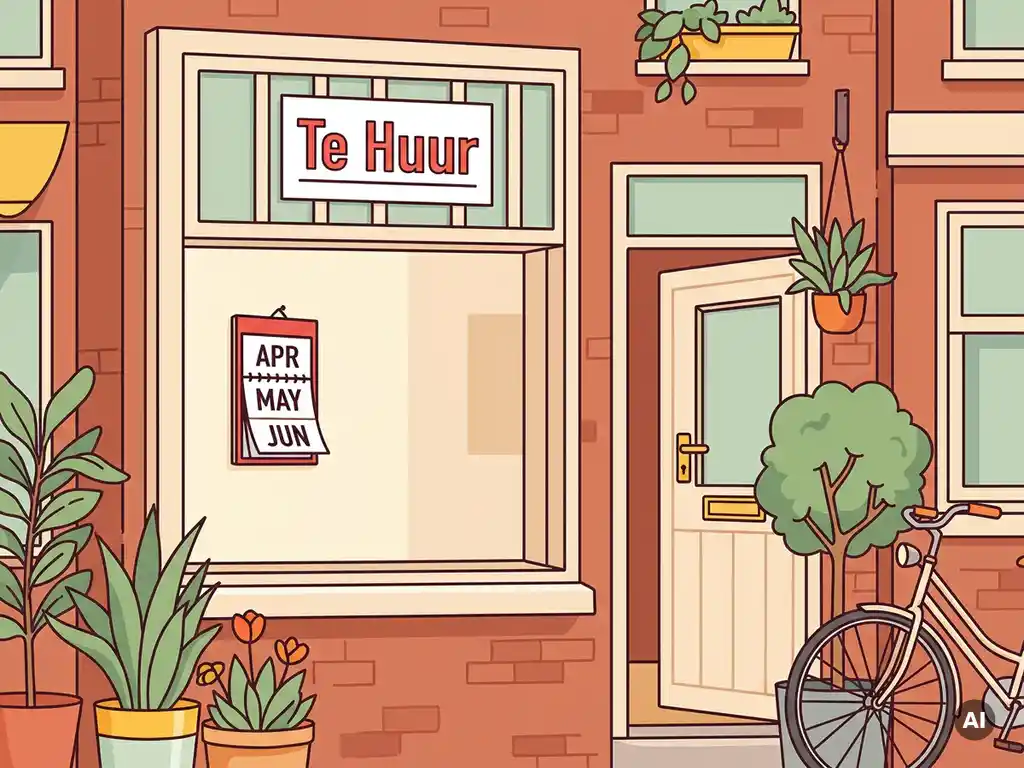
In the Netherlands, you can rent retail space temporarily for periods ranging from one day to two years, depending on the type of contract. For short-term rentals, a pop-up contract or a temporary lease agreement based on the so-called ‘by its nature of short duration’ arrangement is often used. Which contract is the best fit depends on your plans, your budget, and the location you have in mind. In this article, we answer the most frequently asked questions about temporary retail space rental in the Netherlands.
What are the legal minimum and maximum rental periods for retail space?
Dutch law sets a standard lease term of two years as the legal maximum for temporary rental agreements for retail space (also known as 290-business space). Long-term lease agreements typically run for five or ten years. There is no legally established maximum, but leases longer than ten years are rare in practice for regular retail space.
Tenancy law for retail space is laid down in Article 7:290 of the Dutch Civil Code. This provides tenants with relatively strong protection: under a regular five-year contract, the tenant has the right to renewal upon expiry. Temporary contracts of two years or less fall under a separate arrangement, whereby the landlord can terminate the contract upon expiry without the tenant being able to claim tenant protection. Shorter contracts are possible through the pop-up arrangement or through judicial approval, but this requires a specific legal structure.
How short can a temporary lease agreement for retail space be?
A temporary lease agreement for retail space can in theory be as short as one day. This is possible through contracts concluded on the basis of rental “by its nature of short duration”. Think of a market stall for a weekend, a pop-up location during the holidays, or a temporary showroom for a product launch.
The key lies in the legal basis of the contract. With rental “by its nature of short duration,” the law assumes that the temporary nature is inherent to the use, not merely to the landlord’s wishes. A landlord cannot use this arbitrarily to circumvent tenant protection. The temporary nature must logically follow from the nature of the activity, such as a seasonal shop or a temporary event. For short-term rentals of a few weeks to several months, this type of contract is practically well applicable, provided it is properly drafted legally.
What is the difference between a pop-up contract and a temporary lease agreement?
A pop-up contract is a specific form of a temporary lease agreement, but not every temporary lease agreement is a pop-up contract. The difference lies in the duration and the legal basis. A pop-up contract typically runs from a few days to a maximum of three months and is intended for short-term, concept-based rental. A temporary lease agreement can also run for two years and then falls under the statutory arrangement for temporary rental of 290-business space.
In practice, the term “pop-up” is widely used for anything shorter than a regular long-term contract. Nevertheless, there are relevant differences:
- Pop-up contract: Duration of a few days to three months, often based on “by its nature of short duration,” little to no tenant protection for the tenant.
- Temporary lease agreement (max. two years): Legally regulated through Article 7:291 of the Dutch Civil Code, sometimes requires judicial approval, offers limited tenant protection but more legal certainty than a pop-up contract.
- Regular lease agreement: Duration of five or ten years, full tenant protection, most common for permanent establishments.
For entrepreneurs who want to test whether a location works, a pop-up contract is the most flexible entry point. Those who want a bit more certainty but are not yet ready to commit for five years can look at a temporary contract of one to two years. Guidance on leasing and letting from a specialized retail agent helps in choosing the right contract form for your specific situation.
Can you extend a temporary lease agreement without it becoming a permanent tenancy?
Extending a temporary lease agreement for retail space without it automatically converting to a long-term lease agreement is possible, but requires care. For a temporary contract of a maximum of two years, the rule is: if the contract is tacitly continued after expiry, it can be converted into a regular lease agreement with full tenant protection for the tenant.
If you want to maintain the temporary nature, the termination or extension must be actively arranged before the contract expires. Parties can mutually agree to enter into a new temporary contract, but this is not possible indefinitely. Courts take a critical view of arrangements whereby temporary contracts are repeatedly renewed to circumvent tenant protection. In practice, it is advisable to seek legal advice on the viability of the arrangement when entering into a second temporary contract. For pop-up contracts based on “by its nature of short duration,” more flexible rules apply, but here too the rule holds: the longer the total rental period to the same tenant, the greater the risk that a court will no longer recognize the temporary nature.
What does it cost to rent retail space temporarily per month?
The costs of temporarily renting retail space in the Netherlands vary greatly by location, surface area, and contract type. At a prime location in Amsterdam or Utrecht, you can easily pay between 3,000 and 8,000 euros per month for a pop-up space of approximately 50 m². In medium-sized cities such as Groningen, Arnhem, or Tilburg, prices are generally lower, between 1,500 and 4,000 euros per month for comparable spaces.
In addition to the base rent, additional costs are almost always involved:
- Service charges: Contribution to shared facilities such as security, cleaning, and management. On average 10 to 20 percent on top of the rent.
- VAT: Depending on the situation, VAT may apply to the rent.
- Deposit: For temporary contracts, landlords sometimes require a security deposit of one to three months’ rent.
- Fit-out costs: With pop-up spaces, the space is sometimes delivered empty; you are responsible for the fit-out yourself.
Temporary contracts are generally more expensive per m² than long-term contracts, because the landlord passes on the vacancy risks and higher management costs. What is market-standard per street and per city is information that is not always publicly available. KroesePaternotte holds lease contract data going back to 1984 and covering virtually the entire Dutch retail market, enabling them to accurately assess whether a requested rent is realistic.
Where can you find available temporary retail spaces in the Netherlands?
Temporary retail spaces in the Netherlands can be found through public listing portals, directly through landlords, and through specialized agents. The best-known portals display a portion of the available supply, but a large share of temporary spaces, particularly at prime locations, is never publicly listed. Owners of top locations prefer to let through their own network rather than through public platforms.
Practical search channels for temporary retail space:
- Public portals: Listing portals for commercial real estate give a first impression of the market supply, but regularly show already-let properties or outdated listings.
- Shopping centre managers: Many shopping centres have their own vacancy policy and actively let temporary spaces to limit vacancy. Direct contact can yield quick results.
- Municipal initiatives: Some municipalities facilitate pop-up letting in inner-city areas as part of liveability policy.
- Retail agents with network access: Through a specialized agent, you gain access to non-public supply. This is particularly valuable if you have a specific location or city in mind.
For entrepreneurs who are seriously looking for temporary retail space at a good location, engaging a specialist is the most effective route. View the current listings of KroesePaternotte for an overview of available retail spaces throughout the Netherlands, from Amsterdam to Groningen. Would you like personal advice about temporary rental at a specific location? Get in touch directly for a no-obligation conversation about the possibilities.
Related Articles
- How does e-commerce affect Dutch retail real estate?
- How do interest rates affect Dutch retail property yields?
- What are the best high streets to invest in the Netherlands?
- What is the difference between an A1 and B-location in Dutch retail?
- What is a 303 valuation in the Netherlands?
- How large is the vacancy rate in Dutch shopping streets?
- What are the advantages and disadvantages of a shop premises with a flat above?
- What makes Amsterdam a strong retail investment market?
- What is the RICS standard and why does it matter for retail valuations?