
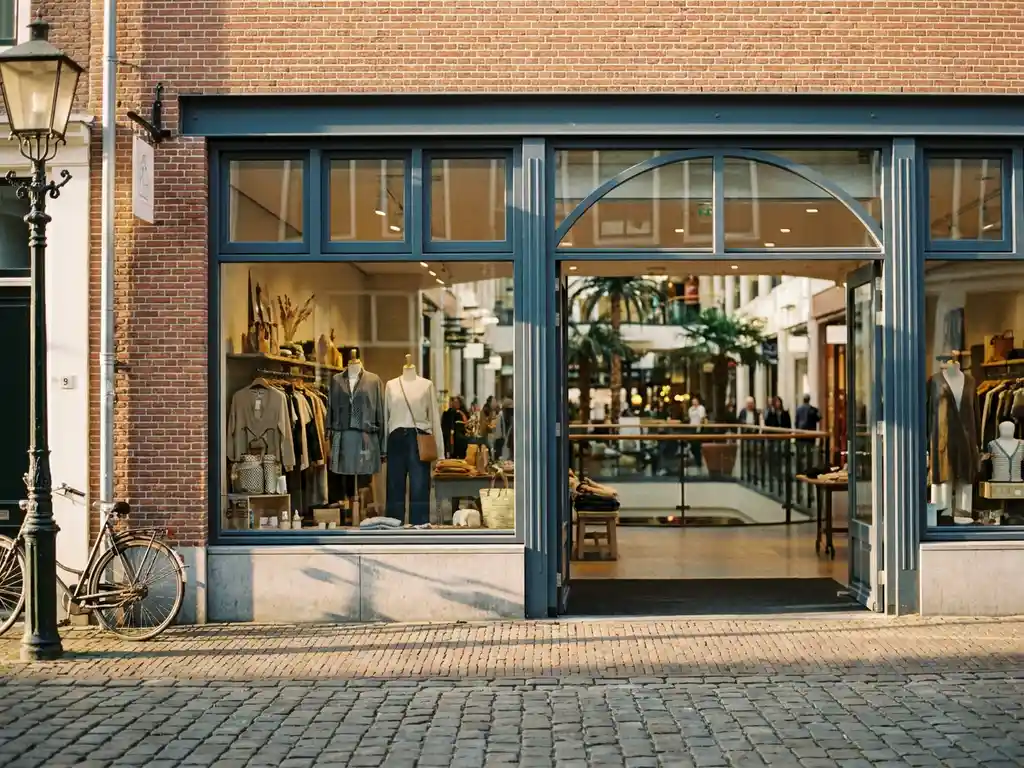
A solitaire retail object is a standalone retail property occupied by a single tenant or a small number of tenants, while a shopping centre is a managed retail destination housing multiple tenants under a coordinated ownership and management structure. The distinction matters significantly in the Dutch retail real estate market because the two formats carry different risk profiles, lease structures, valuation methodologies, and yield expectations. The questions below unpack each of those differences in practical terms for investors evaluating the Dutch retail investment market.
Which retail format typically delivers stronger investment yields in the Netherlands?
Solitaire retail objects in the Netherlands generally offer higher initial yields than prime shopping centres, reflecting the difference in perceived risk rather than underlying quality. In 2026, net initial yields on prime high street retail in Amsterdam’s top locations, such as the Kalverstraat and PC Hooftstraat, sit at the lower end of the retail yield spectrum, while secondary solitaire assets and standalone supermarkets can deliver meaningfully higher returns. Shopping centres are priced more aggressively when they feature dominant market positions and strong anchor tenants.
The yield differential between formats is driven by several factors. Shopping centres with a dominant catchment area, a grocery anchor, and high footfall tend to attract institutional capital at tighter cap rates because income is diversified across many tenants. A solitaire object with a single strong tenant on a long lease can also achieve competitive pricing, but the risk of a single vacancy event is fully priced in. Standalone supermarkets occupy a specific sub-segment where lease lengths, tenant covenant strength, and the essential nature of the product have driven yield compression in recent years. For investors comparing retail property yields in the Netherlands across formats, the key question is not which format yields more in the abstract, but which asset offers the most defensible income relative to the price paid.
What lease structures apply to solitaire retail objects versus shopping centres?
In the Netherlands, both solitaire retail objects and shopping centres are governed by Dutch commercial tenancy law, but the practical lease structures differ considerably between formats. Solitaire assets typically carry straightforward bilateral leases between landlord and tenant, usually for five-year terms with renewal options. Shopping centres often involve more complex lease documentation, including turnover rent components, service charge regimes, and coordinated opening hours obligations.
Dutch retail leases are indexed annually, typically to the Dutch Consumer Price Index, and are subject to market rent review under Article 7:303 of the Dutch Civil Code after a minimum period. This huurprijsherziening process allows either party to request a rent adjustment to market level, which has significant implications for investors acquiring assets where passing rents diverge materially from current market rents. An overhuurde property, where the passing rent exceeds market rent, carries real downside risk at lease renewal. In shopping centres, service charges add another layer of complexity, as landlords must demonstrate that charges are reasonable and recoverable. International investors unfamiliar with Dutch lease law should seek specialist advice before assuming that lease income is as stable as it appears on the rent roll. KroesePaternotte’s valuation and rent review advisory covers precisely this area, including 303 assessments and huurprijsherziening procedures.
How does tenant mix affect a shopping centre’s performance differently than a solitaire object?
Tenant mix is a defining performance driver for shopping centres in a way that simply does not apply to solitaire retail objects. A shopping centre’s ability to generate footfall, sustain dwell time, and command rental growth depends on the combination of anchor tenants, complementary retail categories, and food and beverage offerings working together. A solitaire object either has a tenant or it does not, and its performance is largely determined by the strength of that single occupier and the quality of the location.
In the Dutch retail market, shopping centres that have successfully repositioned their tenant mix toward experiential retail, health and beauty, and grocery anchoring have shown greater resilience than those dominated by fashion multiples that have contracted or exited the market. The presence of a supermarket anchor tenant is particularly valuable in the Netherlands, both for footfall generation and for the defensive income it provides to investors. For a solitaire object, the equivalent question is simply tenant covenant strength: is the occupier financially stable, is the brand expanding or contracting in the Netherlands, and what is the realistic re-letting risk if the tenant vacates? Assessing tenant quality in the Dutch market requires current knowledge of which retailers are actively seeking space and which are rationalising their portfolios, intelligence that only specialists with live leasing activity can provide.
What are the main risks of investing in a solitaire retail object in the Netherlands?
The primary risk of investing in a solitaire retail object in the Netherlands is concentrated income exposure. With a single tenant, any vacancy event eliminates 100% of rental income immediately. This risk is compounded by the structural divergence between strong and weak retail locations in the Dutch market, where the performance gap between an A1 location and a B-location has widened considerably over the past decade.
Several specific risks deserve attention from international investors:
- Location quality: Dutch high streets are highly tiered. A property one street removed from the prime pitch can face materially higher vacancy risk and lower rental growth prospects. The difference between an A1 and an A2 location in a city like Utrecht or Den Haag is not cosmetic.
- Overhuurde risk: If the passing rent exceeds current market rent, the landlord faces a downward rent adjustment at the next 303 review. This is a common trap for investors who rely on the rent roll without stress-testing it against current market evidence.
- E-commerce displacement: Certain retail categories are structurally more exposed to online competition. A solitaire object occupied by a fashion or electronics retailer carries different long-term income risk than one occupied by a grocery operator or a service-based tenant.
- Liquidity: Solitaire assets, particularly outside the four largest Dutch cities, can be harder to exit than well-located shopping centres that attract a broader buyer pool.
Understanding these risks requires granular, location-specific intelligence. KroesePaternotte has been tracking Dutch retail lease data since 1984, providing a depth of market context that no generalist broker can replicate when assessing whether a specific asset is correctly priced.
When should an international investor choose a shopping centre over a solitaire asset?
An international investor should favour a shopping centre over a solitaire retail object when income diversification, management infrastructure, and dominant market position matter more than simplicity and initial yield. Shopping centres are better suited to investors who want reduced single-tenant risk, exposure to a broader range of retail categories, and an asset that can be actively managed to drive rental growth over time.
The case for a shopping centre is strongest when the asset holds a dominant position in its catchment area with limited competing supply, when it is anchored by a grocery or essential services tenant, and when the existing tenant mix leaves room for value-add repositioning. In the Netherlands, the best-performing shopping centres are those that serve as genuine community destinations rather than pure fashion retail galleries. For an institutional fund manager building a European retail portfolio, a dominant Dutch shopping centre offers the kind of income stability and scale that justifies the management complexity.
A solitaire object, by contrast, suits investors who have high conviction in a specific location and tenant, want a simpler ownership structure, and are comfortable with the re-letting risk. Prime high street retail in Amsterdam, Rotterdam, or Eindhoven can offer compelling risk-adjusted returns when acquired at the right price with a clear view of market rent and re-letting potential. The retail market research required to make that judgment with confidence is not available from macro data sources alone.
How are solitaire retail objects and shopping centres valued differently in the Netherlands?
In the Netherlands, both solitaire retail objects and shopping centres are valued using income-based methods, but the inputs, complexity, and benchmarks differ significantly between the two formats. Solitaire assets are typically valued by capitalising the net rental income at a market yield derived from comparable transactions, with adjustments for lease length, tenant covenant, and location quality. Shopping centres require a more detailed discounted cash flow analysis that accounts for multiple lease expiries, void periods, incentive packages, service charge recovery, and capital expenditure requirements.
Dutch valuations must comply with RICS and NRVT standards, and market rent substantiation under Article 7:303 is a critical input for both formats. For a solitaire asset, the valuer must establish whether the passing rent is above, below, or at market level and reflect the risk of rent adjustment accordingly. For a shopping centre, the analysis must assess each unit individually while also considering the overall trading performance and footfall dynamics of the scheme as a whole.
Investors should be aware that Dutch retail valuations are not directly comparable to those in other European markets. The 303 rent review mechanism, the specific NVM valuation methodology, and the way Dutch lease law treats incentives all affect how income is presented and how yield benchmarks should be interpreted. Working with a specialist who conducts valuations across both formats and has access to actual transaction data is essential for substantiating acquisition pricing. KroesePaternotte operates the largest retail valuation practice in the Netherlands, with all major Dutch banks relying on its assessments. For investors conducting acquisition due diligence, that depth of transactional evidence is directly relevant to yield and rent substantiation. International capital seeking a local partner with genuine market intelligence across both solitaire assets and shopping centres can find that expertise through KroesePaternotte’s retail investment advisory service.
Related Articles
- Should you invest in Dutch retail property in 2026?
- What happens if you want to leave a retail space earlier than agreed?
- How to rent a pop-up retail space in a busy city centre?
- How do you check if a retail property has been correctly valued?
- Why is tenant mix important in Dutch shopping centres?
- What is the difference between prime and secondary retail locations?
- What is the impact of online shopping on foot traffic in city centres?
- How do you find a small retail space in the city center that isn't listed on Funda?
- How does Dutch lease law affect retail real estate investors?